Book A Call Now

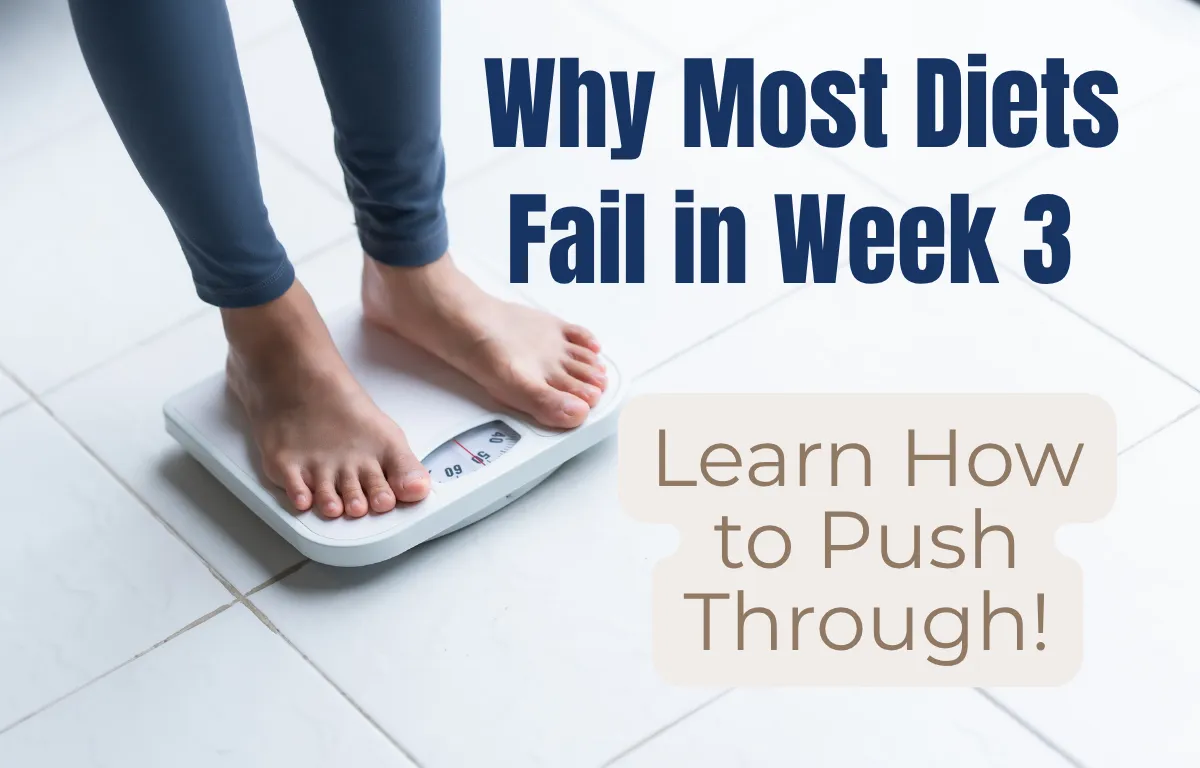
Why Most Diets Fail in Week 3 (And How to Push Through)
Discover why most diets stall at week 3 — it's biology, not willpower. Learn what your body is really doing and how to push through.
I remember standing in my bathroom around day 19 of a fresh start, staring at the scale. The number hadn’t moved in five days. I was doing everything right — or so I thought. Same meals. Same walks. Same drops in my water first thing in the morning. And yet, nothing. My first instinct was to blame myself. “I must be eating too much. I’m probably not trying hard enough.” Sound familiar? Here’s what I didn’t know then: my body had quietly declared war on my progress. Not because I was doing anything wrong, but because that’s exactly what bodies do. And there’s actual science behind it.
Week 3: The Wall Nobody Warns You About
Ask anyone who’s tried to change their eating habits, and there’s a good chance they’ll describe the same thing — a rough patch somewhere around the third week. The initial buzz fades. The “new start” feeling wears off. The scale, which was so satisfying to step on in week one, suddenly refuses to cooperate. And that’s when most people decide it’s not working.
But here’s the thing: week 3 isn’t when your diet stops working. It’s when your body starts working — against your intentions, with the full force of survival biology.
Research published in the International Journal of Obesity found that metabolic adaptation can be detected as early as the first week of caloric restriction, with participants showing measurable reductions in energy expenditure within days of eating less.[1] Your body doesn’t wait politely for you to get comfortable. It responds fast.
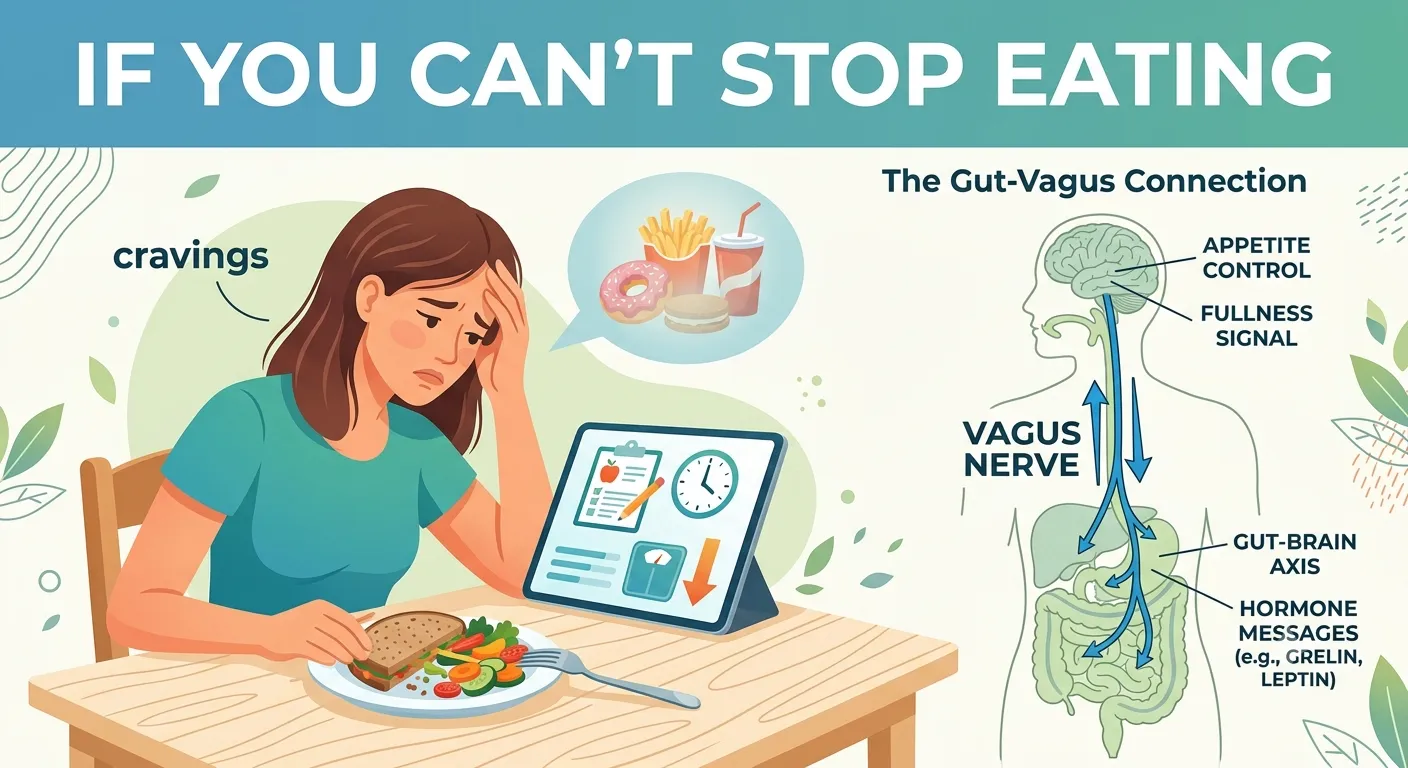
And it’s not just your metabolism slowing down. Your hunger hormones change too. Ghrelin — the hormone produced in your stomach that signals your brain it’s time to eat — rises when you’re in a calorie deficit, essentially turning up the volume on hunger at the exact moment you’re trying to ignore it.[2] Meanwhile, leptin, the hormone that tells your brain you’re full and satisfied, tends to drop as fat stores decrease. The result? You’re eating less but feeling hungrier. It genuinely doesn’t feel fair. Because it isn’t.
What’s Actually Happening in Your Body (Plain English)
Let me explain the mechanism, because once you understand it, it stops feeling like a personal failure and starts feeling like biology doing its job.
Your body has something called a metabolic set point — think of it as your body’s preferred weight, the number it’s been comfortable at for a while. When you start eating less, your body doesn’t interpret that as “great, we’re finally losing some fat.” It interprets it as potential starvation. And it responds accordingly.[3]
Endocrinologist Dr. Shirisha Avadhanula from the Cleveland Clinic explains it this way: “Your body thinks it’s starving and it begins a process of trying to counteract that, to get you to regain the weight you’ve lost.”[3]
So what does that “counteracting” look like in practice?
Your resting metabolic rate — the number of calories your body burns just keeping your heart beating, your lungs breathing, your organs ticking along — starts to drop. Not dramatically in week one. But by week three, if you’ve been in a consistent deficit, your body may be burning meaningfully fewer calories at rest than it was when you started. A 2022 study confirmed that this metabolic slowdown significantly delays the time it takes people to reach their fat-loss goals, because the calorie gap you created in week one has quietly narrowed without you changing anything.[1]
At the same time, something happens with exercise. Your body becomes more efficient. That 30-minute walk that used to burn 250 calories? By week 3, your adapted body might be burning 200 for the same effort. This isn’t a sign you’re unfit — it’s a sign your body is very, very good at conserving energy.[3]
Adaptive thermogenesis is the scientific term for all of this — it’s your body’s collection of tricks for reducing calorie output when it senses a reduction in calorie input. In plain English: your body is cleverer than your diet plan.
The Myth That’s Making This Harder Than It Needs to Be
Here’s the misconception I see everywhere, and it’s doing real damage: the idea that hitting a wall at week 3 means the diet isn’t working for you.
It doesn’t. It means the diet is working exactly as diets do, and your body is responding exactly as bodies do.
The fitness industry has spent decades selling the idea that willpower is the main variable in fat loss. Push harder, eat less, want it more. And so when the inevitable physiological pushback hits — when hunger spikes and the scale stalls — people blame themselves. They think they’ve failed. They quit.
But the research tells a completely different story. Studies on diet adherence consistently show that the early-weeks dropout isn’t caused by lack of motivation or discipline. It’s caused by the body’s hormonal and metabolic response to restriction — a response that is measurable, predictable, and entirely normal.[2]
The Minnesota Starvation Experiment, a landmark study that’s been revisited by modern researchers, showed that metabolic adaptation isn’t some quirk in a few unlucky people. It’s a universal human response to eating less than you burn.[4] Every body does it. The difference in long-term outcomes comes from what you do when it happens — not whether it happens.
So if you’re in week 3 and you feel like your body is working against you, you’re not imagining it. It is. And now you know why.
My Week 3 Moment (What It Actually Looked Like)
I want to be honest with you about what week 3 actually felt like for me, because I think we sanitise these stories too much.
It was a Tuesday. I remember because I had a full day ahead and I woke up hungry in a way I hadn’t felt in the first couple of weeks. Not just “I’d love breakfast” hungry. More like “I could eat everything in this kitchen” hungry. And the scale hadn’t moved. And I was tired.
What I didn’t know at the time was that my ghrelin was probably elevated — my body was doing its hormonal best to get me to eat more. What I also didn’t know was that my metabolism had quietly adjusted, and that this was the wall everyone hits but nobody talks about in the highlight reels.
What helped me most in that moment wasn’t white-knuckling through on willpower. It was changing my frame entirely. I stopped asking “why isn’t this working?” and started asking “what does my body need right now to keep going?” More rest. A slightly more satisfying meal. A short walk instead of skipping movement altogether. And finding something to support my metabolic system that wasn’t a caffeine spike. That’s when I started adding pHix to my morning routine. Having something that works with my metabolism quietly in the background, without making me wired or anxious, genuinely made week 4 feel different to week 3.
The Stat That Changed How I Think About This
Here’s the number that stopped me in my tracks when I first read it: according to research published in the American Journal of Clinical Nutrition, the metabolic slowdown from caloric restriction can amount to a reduction of over 178 kcal per day — detectable within the first week of dieting.[1]
That’s not a plateau hitting at week 6 or 8. That’s your metabolism adapting within days.
And then consider this from the Cleveland Clinic: for your body to truly stabilise and accept a new weight as its new set point, it can take three to five years.[3] Three to five years. Not three to five weeks.
I’m not sharing that to be discouraging. I’m sharing it because it reframes the whole conversation. If your body needs years to adjust, then expecting the scale to move smoothly and consistently over 30 days is asking the impossible. Progress in fat loss is never a straight line — it’s a winding road with flat stretches, and those flat stretches are not signs of failure. They’re signs your body is doing the hard work of adjusting.
Week 3 is a flat stretch. It’s not the end of the road.
What Actually Helps When You Hit the Wall
Based on research — and on lived experience — here’s what genuinely moves the needle when you hit the week-3 wall:
- Don’t slash calories further. Cutting more severely when the scale stalls is the most common mistake. It deepens the metabolic adaptation and increases hunger hormones further. Consistency with your current intake beats severity every time.[3]
- Add a little variety to your movement. If your body has adapted to your current exercise, a small change — a new route, a different class, some bodyweight exercises at home — can restore some of the calorie-burning you’ve lost to efficiency.[3]
- Prioritise sleep. Sleep deprivation raises ghrelin and lowers leptin — the exact hormonal combination that makes hunger feel unbearable. Getting 7–8 hours isn’t optional when you’re in a deficit.[2]
- Track what you’re actually eating. Not obsessively, but honestly. Week-3 portion creep is real. A slightly larger handful here, an extra splash of oil there — it adds up without feeling like it.
- Support your metabolic system. This is where I find that adding pHix to my routine supports what my body is trying to do naturally. Brown fat activation through thermogenesis — the body’s own heat-producing, calorie-burning process — is a gentle way to keep metabolism ticking without stimulants or the cortisol spike that comes with them.
- Give yourself credit for showing up. Seriously. Week 3 is statistically the hardest week. The fact that you’re still here means you’re further along than most people get.
Keep Going — Week 4 Feels Different
Week 3 is where most diets end. But it doesn’t have to be where yours does. Now you know that the stall isn’t a verdict on your effort — it’s your body running its ancient survival software, and it’s completely normal. The people who push through aren’t the ones with more willpower. They’re the ones who understand what’s happening and choose to keep going anyway.
If you’re in that week-3 moment right now, I see you. And I’d love to have you join my little corner of the internet where we talk honestly about this stuff — the biology, the frustration, and what actually helps. You can sign up for my emails below for weekly support, or if you’re curious about how pHix supports fat metabolism without the jitters, you can learn more here. Either way — keep going. Week 4 feels different. I promise.
These statements have not been evaluated by the FDA. This product is not intended to diagnose, treat, cure, or prevent any disease. Always consult your healthcare provider before starting any new supplement.
References
- Metabolic adaptation delays time to reach weight loss goals — PMC / NIH (2022)
- Metabolic adaptation is associated with less weight and fat mass loss in response to low-energy diets — PMC / NIH (2021)
- How To Break That Frustrating Weight-Loss Plateau — Cleveland Clinic, Dr. Shirisha Avadhanula (2022)
- Metabolic adaptation to caloric restriction and subsequent refeeding: the Minnesota Starvation Experiment revisited — PubMed / American Journal of Clinical Nutrition (2015)