
Book A Call Now

Menopause Is More Than Hot Flashes
Every woman will go through menopause, yet most of us reach it with almost no idea what's actually happening in our bodies. It isn't one moment — it's a years-long transition with three distinct phases, and it looks different for everyone.
Some women move through this with barely a symptom. Others face years of disrupted sleep, mood changes, and physical discomfort before things settle. Both are completely normal. What shouldn’t be normal is going through it without understanding why — so that’s where this page starts.
Three Phases of Menopause
Perimenopause
The phase most people actually mean when they say “menopause.”
Starts when oestrogen and progesterone begin fluctuating unpredictably . Usually in your 40s, though it can start earlier.
Can last 4 to 10+ years, and it’s when most symptoms show up.
Menopause
The single point in time once you’ve gone a full 12 months without a period.
If your period restarts after a few months’ gap, the 12-month clock resets.
The average age in the UK is 51 — though it’s different for everyone.
Postmenopause
Everything after that 12-month mark, for the rest of your life.
Most acute symptoms ease, but new long-term priorities take over: bone, heart, and vaginal/urinary health.
Many women describe this stage as their most settled and confident.
Menopause Phases
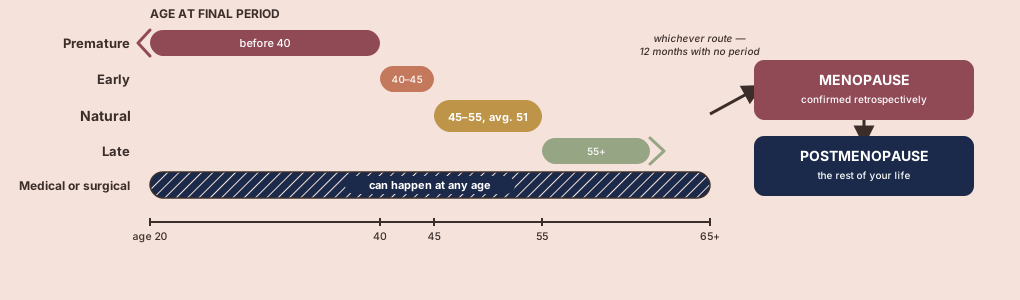
Menopause doesn’t arrive the same way for everyone. Here are the main routes into it:
Premature (POI): final period before age 40 — can happen as early as your teens or twenties, caused by premature ovarian insufficiency.
Early: final period between 40–45.
Natural: final period between 45–55, averaging 51 — how most women experience it.
Late: final period after 55.
Medical or surgical: triggered instantly by treatments such as chemotherapy or ovary removal, rather than gradually — which is why symptoms here are often more sudden and intense.
Common Symptoms
Hot Flushes & Night Sweats
Sudden waves of heat, often with a racing heart, day or night . Driven by the brain's temperature centre reacting to shifting oestrogen.
Sleep Disruption
Trouble falling or staying asleep, sometimes tied to night sweats. Poor sleep then makes every other symptom feel worse.
Mood Changes & Irritability
A shorter fuse or waves of anxiety that feel out of character. Hormone shifts affect brain chemistry directly.
Brain Fog
Trouble concentrating or misplaced words. Usually temporary, and one of the most under-discussed symptoms.
Joint Aches
Stiffness in knees, hands, or shoulders. Falling oestrogen reduces its natural anti-inflammatory effect on joints.
Vaginal Dryness & Discomfort
Thinner, drier tissue as oestrogen declines. Very treatable, and nothing to feel embarrassed discussing with a GP.
Small Habits That Actually Help
- Move most days. Regular movement (walking counts) is linked to better mood, sleep, and bone health through the transition.
- Protect your sleep window. A cooler bedroom and a consistent wind-down routine ease the knock-on effects of night sweats.
- Build in stress-recovery, not just stress management. Even 10 minutes of quiet breathing daily can take the edge off how intense hot flushes feel.
- Strength training twice a week if you can. One of the few things that directly protects the bone density you start losing from perimenopause onward.
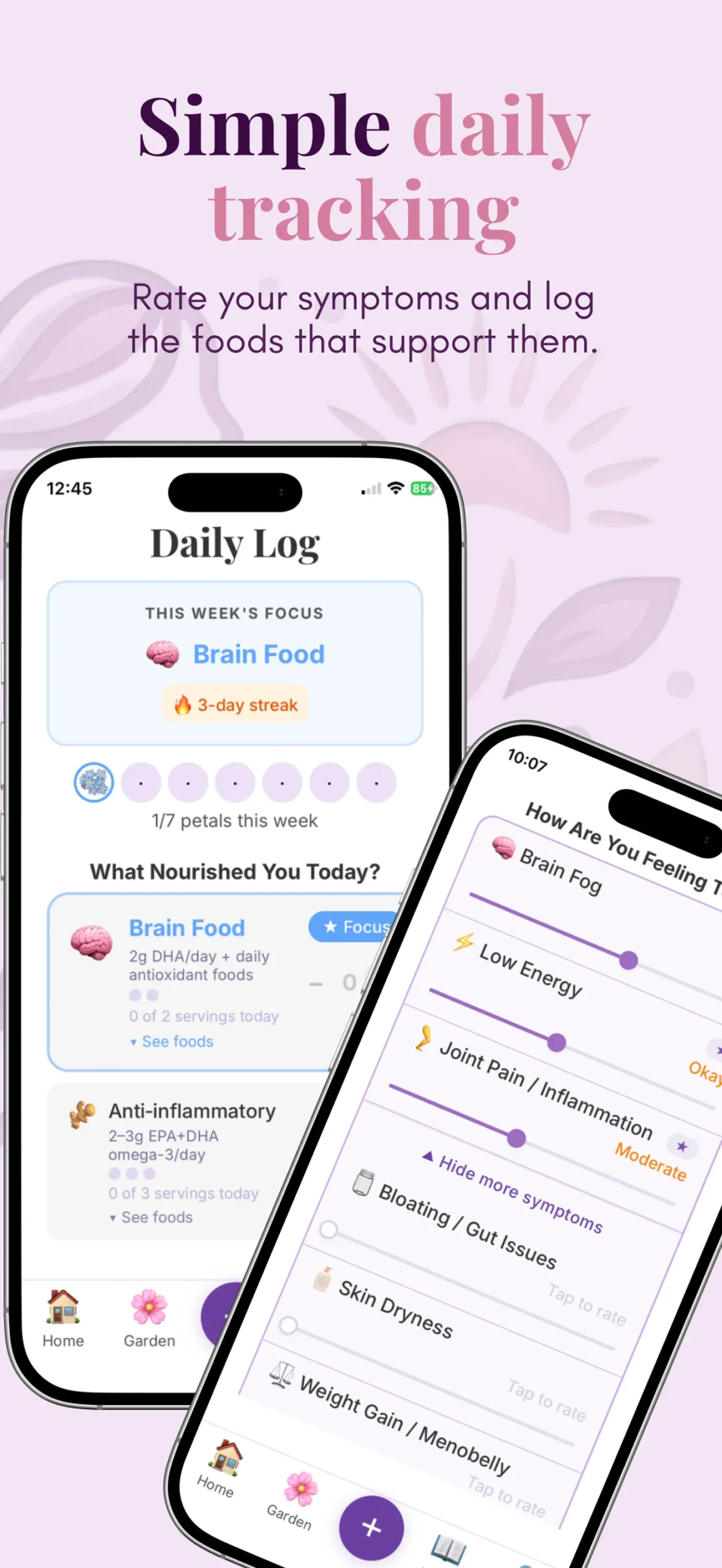
- Track your patterns. Noticing what precedes a rough week (poor sleep, alcohol, stress) helps you adjust early. It’s exactly what the MenoMap App is built for. (see details below)
None of this is about doing everything perfectly — small, consistent changes matter more than any single “fix.”
Food & Your Hormones
Nutrition won’t stop menopause, but the right everyday choices can meaningfully ease symptoms and protect your long-term health.
Calcium & Vitamin D
Bone density starts declining faster from perimenopause. Dairy, leafy greens, oily fish, and often a supplement help offset that
Protein at Every Meal
Supports muscle mass that naturally declines as oestrogen falls. Aim for a source at breakfast, not just dinner.
Phytoestrogens
Soy, flaxseed, and chickpeas may modestly ease hot flushes for some women . Effects vary, and it's not a substitute for HRT.
Less Alcohol & Caffeine
Common (though individual) triggers for hot flushes and disrupted sleep, especially in the evening.
Fibre & Gut-Friendly Foods
Supports the gut-hormone connection researchers increasingly link to how oestrogen is metabolised in the body.
This is a foundation to build on, not a replacement for medical treatment where symptoms are significant.
You're Not Alone In This
Every woman’s experience of menopause is different. Some breeze through it, some have years of disruption, and most land somewhere in between. If you’ve ever felt dismissed, unprepared, or like nobody talks about this honestly, you’re not imagining it. This remains one of the most under-discussed transitions in women’s health, despite touching half the population.
You don’t have to figure it out alone, and you don’t have to wait until things feel unmanageable to ask for help. From a GP, a specialist, or simply from information you can trust.
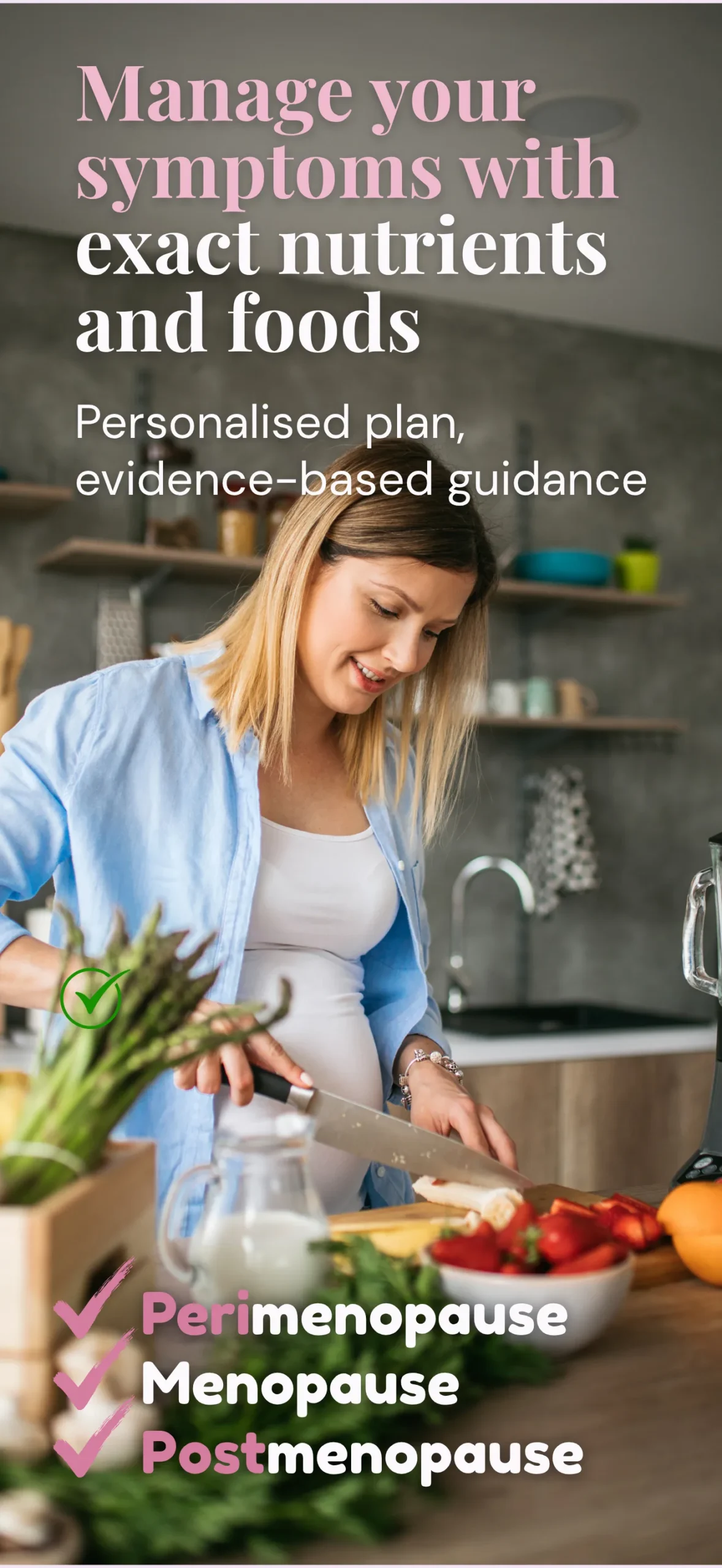
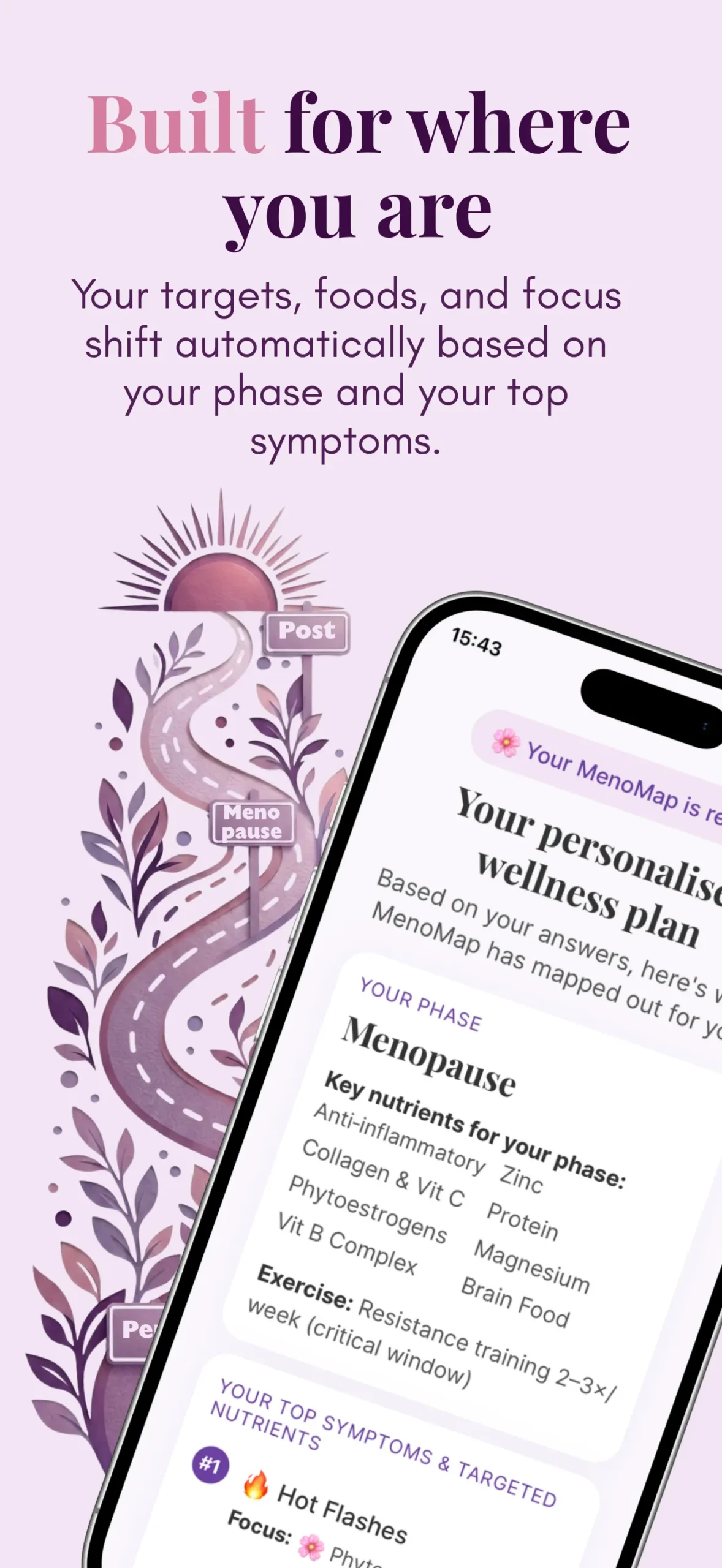
If you’d like to manage your symptoms with evidence-based food and track how you’re feeling day to day, our companion app MenoMap is a simple way to do that — a small, optional tool alongside everything here.

This page offers general information, not personal medical advice — please speak to your GP or a menopause specialist about your own symptoms and options.
The phase most people actually mean when they say “menopause.”