
Book A Call Now
STAGE 2 OF 3
Menopause: Reaching the Milestone
Menopause itself isn't a phase — it's a single point in time. Everything before it is perimenopause; everything after is postmenopause. Here's what that milestone actually means, and what your options are.
What "Reaching Menopause" Actually Means
You’ve officially reached menopause once you’ve gone 12 consecutive months without a period. It’s confirmed retrospectively — there’s no test on the day itself that tells you “this is it.” If your period restarts after a gap, the 12-month countdown resets — you’re still in perimenopause.
Average age: 51
the UK average
Age 45 - 55
natural menopause range
Before 40 / 40–45
premature / early menopause
Instant
medical or surgical menopause
What's Happening Hormonally
By this point, oestrogen and progesterone have settled at consistently low levels rather than fluctuating. For many women, this actually brings some relief, the unpredictable swings of perimenopause ease off, even though oestrogen itself stays low.
Treatment Options — An Overview
HRT
The most effective treatment for most symptoms . HRT (Hormonal Replacement Therapy) replaces the oestrogen (and often progesterone) your body no longer makes.
Lifestyle Approaches
Nutrition, strength training, sleep hygiene, and stress management all have evidence behind them.
Non-Hormonal Medication
Certain prescription options can ease hot flushes for women who can't or prefer not to take HRT.
Vaginal Oestrogen
A local, low-dose option for dryness and discomfort. This option has a lower risk profile than systemic HRT.
Food and menopause are connected
Falling and fluctuating oestrogen affects far more than your cycle — it influences bone density, insulin sensitivity, inflammation, and even neurotransmitter activity in the brain. That’s why targeted nutrition can meaningfully ease symptoms like hot flashes, brain fog, joint pain, and sleep disruption, alongside protecting long-term bone and heart health.
Nutrition for Menopause
By the time you reach menopause, oestrogen has dropped sharply. Nutrition here focuses on cushioning that drop and protecting the areas oestrogen used to help guard — with bone and heart health moving to the foreground.
HELPS WITH: HOT FLASHES, NIGHT SWEATS.
Phytoestrogens (Soy, Specifically)
The best-evidenced nutrient here for hot flushes and night sweats — soy isoflavones are linked to real reductions in frequency and severity. This is soy-specific: flaxseed trials for hot flushes came back null, even though flaxseed is good for other things.
Roasted soy nuts, natto, tofu, tempeh, soy milk, edamame. ~50–100mg isoflavones/day. More in MenoMap
HELPS WITH: POOR SLEEP, BONE RESERVES
Calcium & Vitamin D
Bone loss tends to accelerate most from here, since oestrogen’s protective effect on bone is now gone. Daily intake of Calcium and Vitamin D rich foods and supplements are key, not occasional.
Dairy or fortified plant milks, leafy greens, oily fish, sensible sun or a supplement.
HELPS WITH: BONE HEALTH
Vitamin K2
Activates the protein that actually deposits calcium into bone — without enough K2, calcium intake may not fully reach your bones. Safety note: on warfarin or another anticoagulant? Check with a GP or pharmacist before significantly increasing K2-rich foods.
Natto (one serving ≈ a week’s target), aged cheeses (Jarlsberg, Gouda, Manchego), egg yolk.
HELPS WITH: BRAIN FOG, MEMORY, LOW MOOD
Omega-3 (“Brain Food”)
DHA is the brain’s primary structural fat, and omega-3s have real, if moderate, trial support for both cognitive symptoms and mood through the transition.
Oily fish, walnuts, chia seeds, ground flaxseed.
HELPS WITH: MUSCLE LOSS, WEIGHT CHANGES
Protein
Muscle mass starts declining faster once oestrogen drops. A protein source at every meal, not just dinner, helps maintain strength and metabolism.
Lean meat, fish, eggs, Greek yogurt, tofu, lentils, tempeh. ~1.2–1.6g/kg body weight/day.
HELPS WITH: LOW LIBIDO, VAGINAL COMFORT
Zinc
A dedicated trial in postmenopausal women with low zinc found it significantly improved desire, arousal, and vaginal moisture — one of the more directly-proven nutrients here.
Oysters, beef, pumpkin seeds, hemp seeds.
HELPS WITH: LOW ENERGY, FATIGUE
Iron & B Vitamins — Especially If You’re Actually Low
Deficiency can genuinely worsen fatigue, and this is the phase it’s most likely to matter, since periods are still happening. But it only helps if you’re actually deficient — worth a GP blood test rather than guessing. Folate matters doubly here, since fertility hasn’t fully declined.
Lean red meat, lentils, leafy greens, fortified cereals, eggs.
HELPS WITH: WEIGHT CHANGES (“MENOBELLY”)
Fibre
The best-evidenced nutrient on this list for weight — a large body of trial evidence links adequate fibre intake to modest but real weight loss through this stage.
Chia seeds, artichoke, lentils, beans, ground flaxseed. ~21–25g/day.
Food doesn’t replace medical treatment where symptoms are significant — think of it as the foundation everything else sits on top of.
For the full list of foods containing these nutrients, download the MenoMap app
see details below
When to See Your GP

- To discuss whether HRT or another option is right for you
- If symptoms affect your quality of life, sleep, or relationships
- If you experience any bleeding after 12+ months period-free — always check this
- For a general health review (blood pressure, cholesterol, bone health)
What the Research Says
- NICE guidance (NG23) states HRT is the most effective treatment for hot flushes and night sweats, and can also help mood, joint pain, and vaginal symptoms.
- For most healthy women under 60, or within 10 years of their last period, HRT’s benefits generally outweigh the risks.
- Vaginal oestrogen has minimal absorption into the bloodstream and is considered very low-risk — the US FDA removed its boxed warning label in 2025, reflecting this same shift; UK guidance has long treated it as a low-risk, first-line option too.
- Weight-bearing exercise and adequate protein and calcium become increasingly important from this stage onward.
This page offers general information, not personal medical advice — please speak to your GP or a menopause specialist about your own symptoms and options.

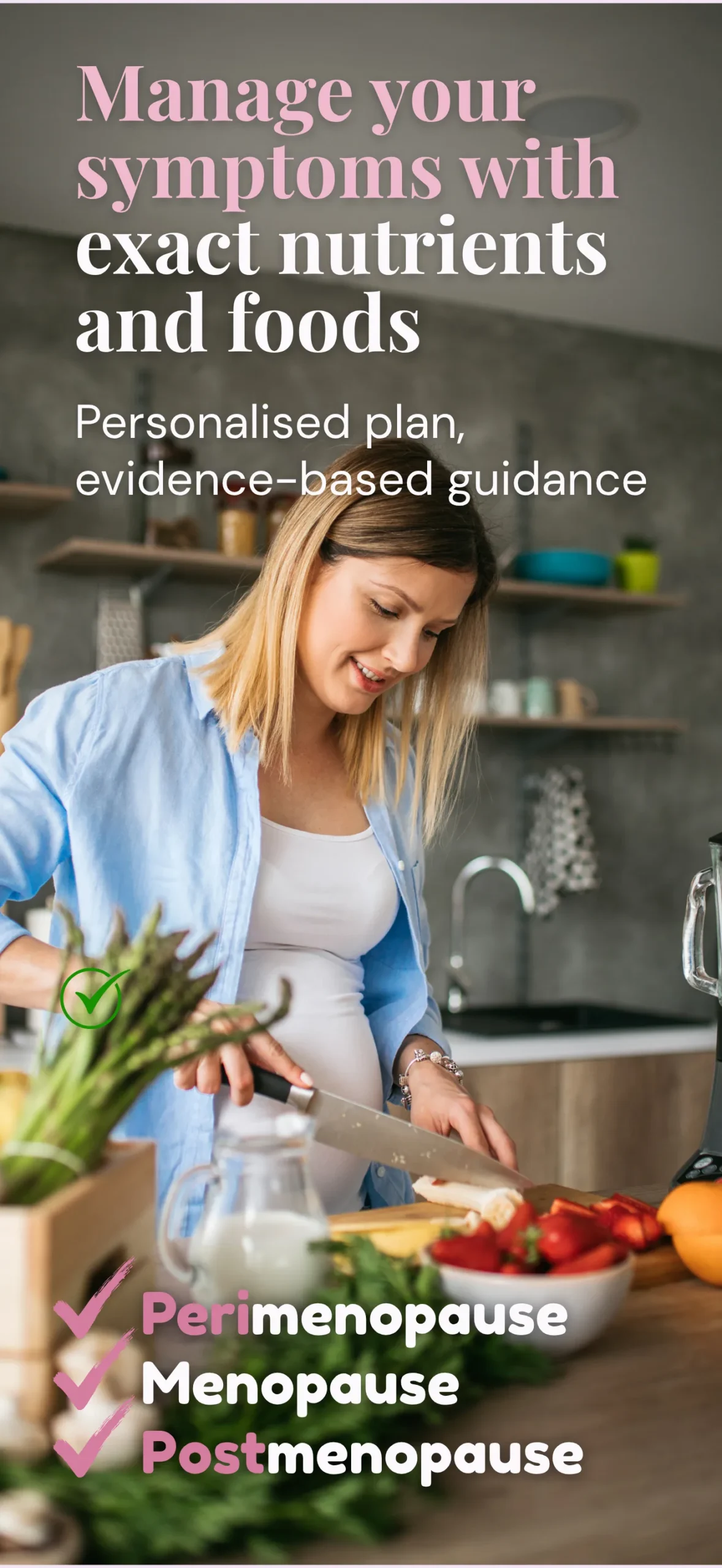
Evidence-based nutrition guidance for Perimenopause, Menopause, and Postmenopause
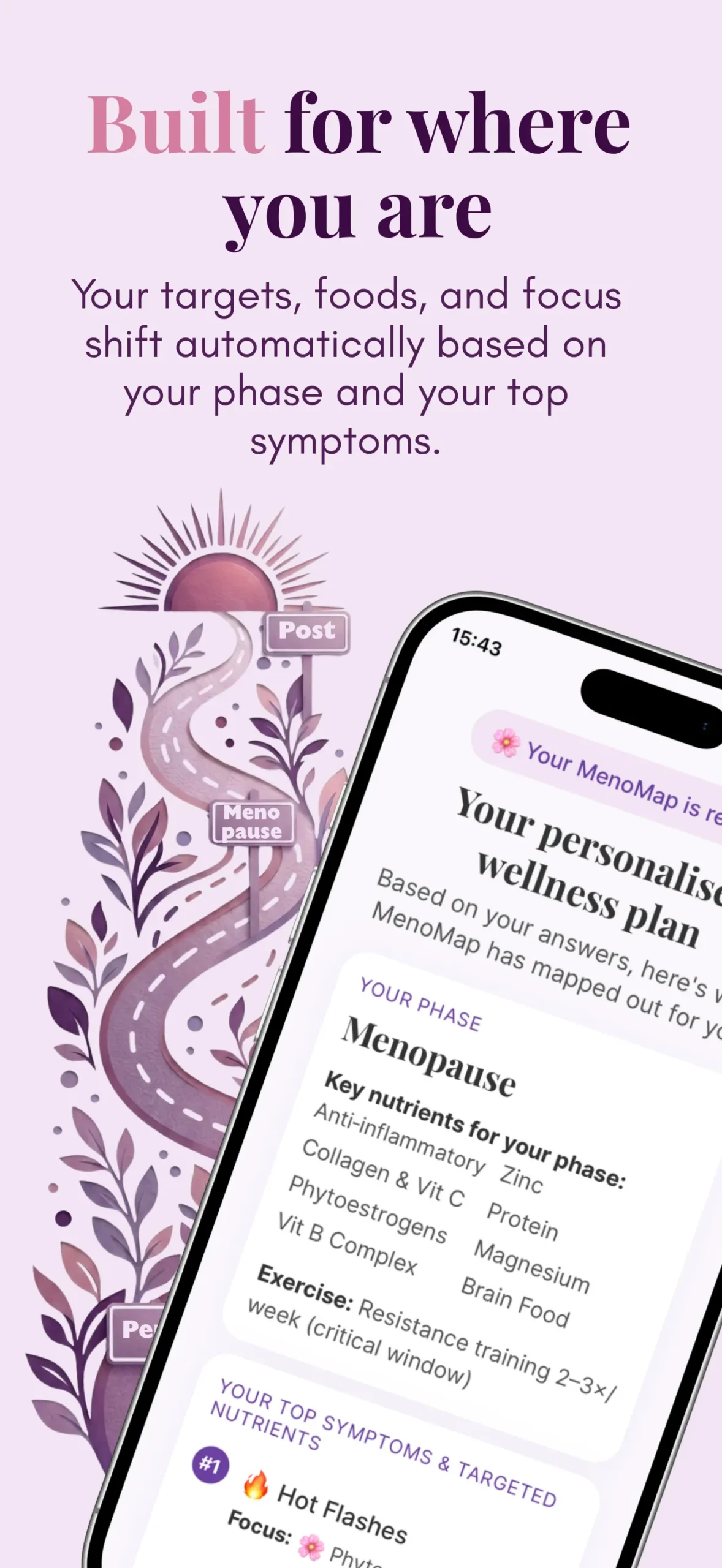
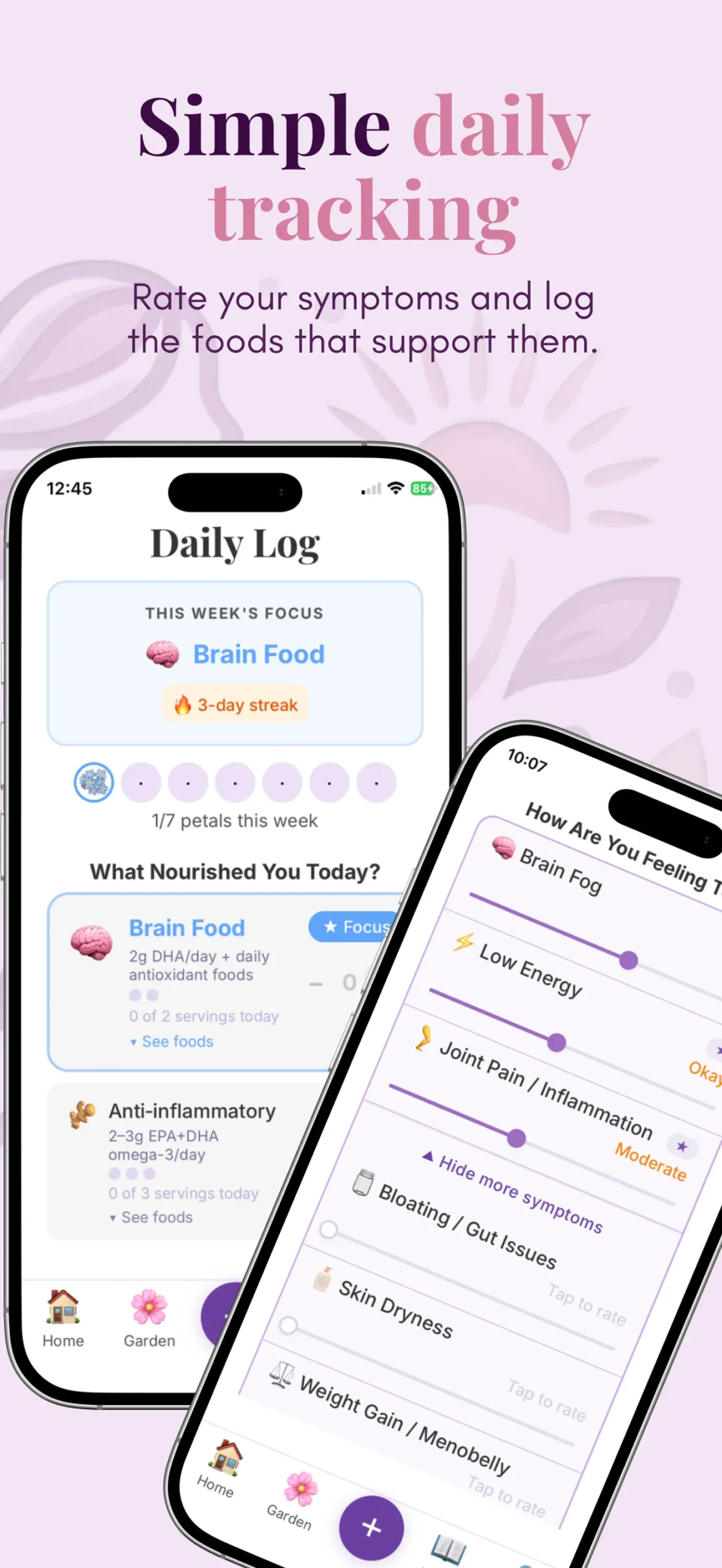
- Log what you eat and how you feel and see the connection between the two in your own data, not just averages
- Personalised to your top 3 symptoms, your phase, and your goals
- A full MenoKitchen food database, plus a protein tracker built for menopause
- Everything stays private on your phone. Nothing is ever sent to a server
Want early access? Get in touch using the button below and we’ll let you know the moment MenoMap launches.

This page offers general information, not personal medical advice — please speak to your GP or a menopause specialist about your own symptoms and options.
The phase most people actually mean when they say “menopause.”